Grease Trap Cleaning Cost, What 5 Real Bids Show
The short of it
- No national rate exists: five haulers bid $0.20 to $1.95 a gallon on one Texas public bid tabulation.
- Geography moved one bidder's own number, $0.84 per gallon in the ELPA region against $1.95 in the Permian Basin.
- That per-gallon line covered haul and disposal only, with no mobilization, per-visit or per-tank charge against it.
- A single kitchen buys one truck visit, not a route, so expect a trip or minimum charge.
- Your part is tank capacity, the last pump-out receipt and truck access, while opening and hauling need a vacuum truck.
Grease trap cleaning cost has no national rate: on one public Texas bid tabulation, five haulers priced the same scope from $0.20 to $1.95 per gallon.
Those unit prices sit on the bid tabulation for IFB #05-IFB-CNP-2223, a competitive solicitation run by IDEA Public Schools for kitchens in its Child Nutrition Program across several Texas regions. The solicitation number ends in 2223, which reads as a 2022-23 purchasing cycle, the buyer's upload path dates the file to March 2025, and it was read in September 2026, so treat the figures as a dated snapshot rather than current pricing. They are institutional bid prices, not retail quotes, and the useful part is the spread: roughly tenfold, on identical scope, inside one solicitation.
Consumer aggregators price homeowner jobs, so a national average for a trap service with no buyer, no document and no date behind it is residential pricing wearing a chef's coat. Every figure below names its document, its buyer and the date it was read, as the editorial policy requires. For a quote on your own trap, calling (800) 555-0184 goes to an independent hauler quoting in your market.
Five haulers, one scope: what a public bid sheet shows
The tabulation carries one line item, grease trap waste haul and disposal, priced per gallon against a single scope covering the same school kitchens. The five bidders are labeled below in the sheet's order.
| Bidder on the tabulation | Per gallon, haul and disposal | Note on the sheet |
|---|---|---|
| Vendor 1 | $0.80 | one region on the sheet |
| Vendor 2 | $0.70 | all locations |
| Vendor 3 | $0.84 (ELPA region), $1.95 (Permian Basin region) | priced separately for the ELPA and Permian Basin regions |
| Vendor 4 | $0.35 | one region on the sheet |
| Vendor 5 | $0.20 | lowest figure on the sheet |
All six unit prices come from that one document. The line covers hauling and disposal of the pumped waste only: no mobilization, per-visit or per-tank charge appears on it.
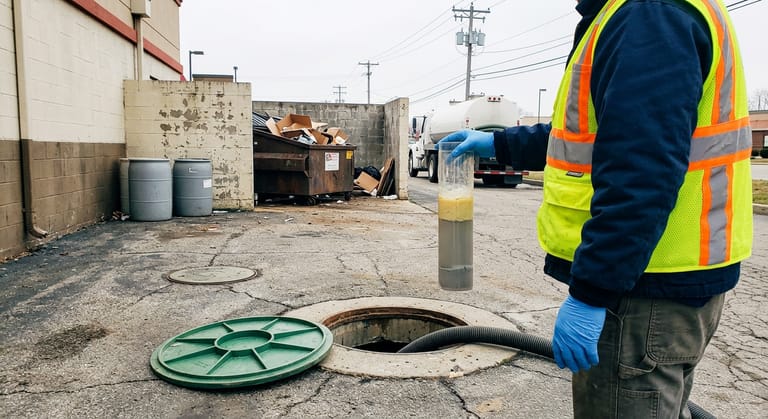
How much does grease trap cleaning cost when you are one kitchen, not a school district
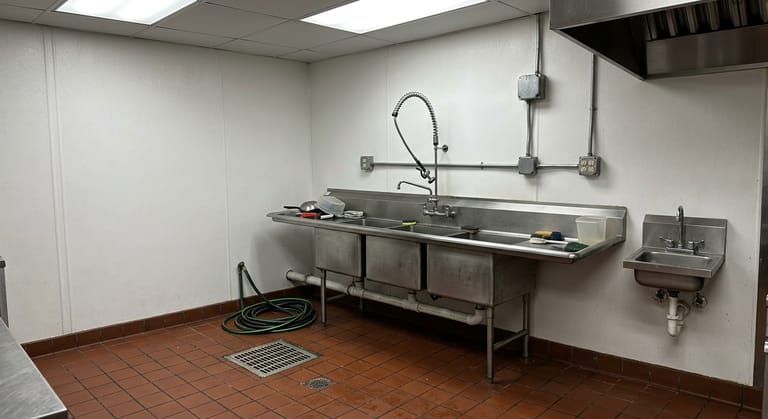
Less predictable, and per gallon almost certainly higher. The $0.20 floor belongs to a high-volume buyer competing for a multi-site award, so no operator should expect it on a phone call. A single kitchen buys one truck visit, not a route, and that visit normally carries a trip or minimum charge the per-gallon rate never shows.
Cadence sets volume too: that scope required cleaning at least every three months, or sooner once the tank hit its fill trigger, "when 50 percent or more of the wetted height of the grease trap" holds grease and solids. Your own interval comes from your city rather than that contract: see how often to clean a grease trap.
An automatic grease removal unit's daily container is staff work, not a truck. Your grease trap cleaning cost starts where a truck, a manifest and an approved disposal site come in, and what that service covers is worth reading before the quotes arrive.
Why those unit prices spread that wide
Distance to an approved disposal site is the clearest driver on the sheet. Vendor 3 priced the same line twice in one bid: $0.84 per gallon for the ELPA region and $1.95 for the Permian Basin. Same company, same specification, same solicitation, so that gap is geography rather than a market spread.
Route density pushes the other way: a hauler with several kitchens already on the route spreads one truck day across all of them. Contract volume is the third lever, since five companies chasing a multi-site award price differently than one company quoting one restaurant once.
Line items are not always comparable either: on a second line, barrel grease removal including any area spill clean up, only one of the five bidders entered a price and the other four wrote N/A.
Talk to someone who opens these lids every week
Call (800) 555-0184Free to dial. Whoever answers pumps and services grease interceptors; ask for the registration number your city requires while you are on the call.Partner haulers and plumbers who work on food service drains- Partners who pump interceptors, not just unclog sinks
- Answered during the dinner rush
- Dialing costs nothing and books nothing
What moves a grease trap pumping cost beyond the per-gallon rate
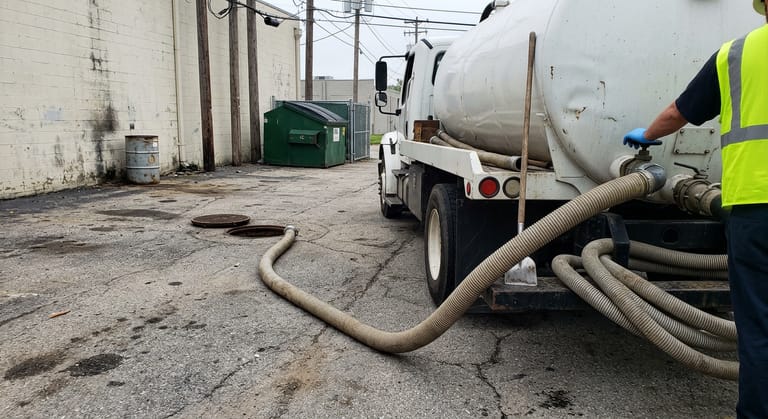
- Gallons actually removed. Volume means tank capacity, not fixture flow: a hydromechanical unit's GPM rating describes flow rate, never the gallons sitting in the ground. Interceptor sizing explains where that number lives.
- Full evacuation instead of a skim. The Windsor Heights, Iowa grease ordinance requires traps and interceptors to be fully evacuated, cleaned and inspected, not skimmed of floating grease only. A quote priced on skimming the cap is a cheaper quote for a different job; see what a full pump-out covers.
- Where the load goes. Under that same section, waste and wastewater removed from a grease interceptor or trap must be disposed of at a water reclamation facility or another approved facility, and may not be discharged to any private or city sanitary or storm sewer. Tipping fees there ride inside your price.
- Access and timing. Lid depth, distance from truck parking to the cleanout, a locked gate at 6 a.m., and a Saturday night emergency call priced as a different product than a Tuesday morning visit.
- Paperwork. What comes back after the visit is your city's call: Kaufman, Texas keeps a manifest on file for every pump-out, and Greensboro, North Carolina wants its cleanout report filed electronically, with the receipts inside 14 days. Record rules city by city are on the interval page.
Buying and setting the tank is a separate budget, covered in grease trap installation cost. City FOG permit and reporting fees are local and change on local schedules, so ask your sewer authority for its current fee schedule.
What a quote must contain before a truck rolls
- The unit. Per gallon, per visit or per tank, in writing, and which one your invoice will use.
- What that unit includes. On the Texas sheet it covered haul and disposal only. Ask where the tipping fee sits in yours.
- Estimated gallons. Tank capacity from the nameplate or the drawings, not a flow rating.
- Full evacuation stated explicitly, walls and baffles included, with a look inside afterward.
- Trip, minimum and after-hours charges, named as their own lines rather than folded into a rate.
- Documents that come back: the manifest, plus whatever report your city expects and who files it.
Two quotes that differ by a factor of three
A quote more than double another is not automatic proof of gouging: on that Texas sheet one vendor's own per-gallon price was $0.84 in the ELPA region and $1.95 in the Permian Basin, inside a single bid. Two minutes of your own, before anyone is called:
- Find the trap's capacity in gallons, from the nameplate, the plans or the last invoice.
- Find the date and the gallons on the most recent pump-out receipt.
- Stand where a truck would park and note the distance to the lid and anything in the way.
That is where the operator's part stops. Measuring the grease cap and sludge depth, opening the trap, evacuating it and hauling the load to an approved facility are a hauler's work with a vacuum truck.
If two quotes still sit far apart, four questions make a phone quote reliable:
- What the unit is, per gallon, per visit or per tank.
- What that unit includes.
- How many gallons they expect to pull.
- What the trip and after-hours lines look like.
Calling (800) 555-0184 puts those four to an independent hauler quoting in your market, before any truck is booked.