A grease trap cleaning service pumps the tank out completely, scrapes the walls and baffles, and leaves a manifest behind. Most city pretreatment programs want that done before fats, oils and solids reach 25 percent of the unit's liquid depth, which lands between 30 and 90 days for a full-service kitchen. Miss it and the floor sink tells you first, usually on a Friday.
The call, and what happens on it
Dialing the number reaches a service partner who works on food service drains in your area. Silverbeck does not own a truck. The company that answers pumps and maintains interceptors. Silverbeck does not check its paperwork, so before booking, ask for the hauler permit or registration your city or sewer authority requires, and for the manifest it will leave.
Expect four questions, and expect them fast, because the answers decide the price and the truck. Which unit, how big, when it was last pumped, and how a hose reaches it. A kitchen manager who has those four in hand can expect a working estimate over the phone; the firm number is the partner's, confirmed at the lid. A kitchen manager who does not usually gets a site visit first, and a second visit to do the work.
Whatever that company quotes is between the two of you. A call obligates a kitchen to nothing at all.
A hauler who quotes without asking those four is quoting a guess, and the guess gets revised in your parking lot with the truck already there.
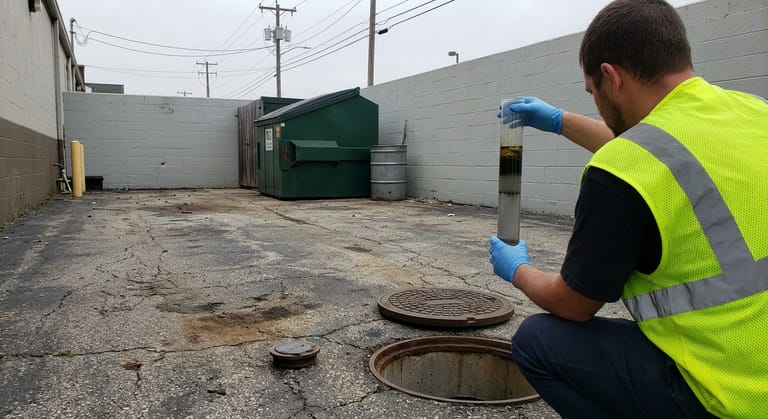
When it is an emergency and when it is not
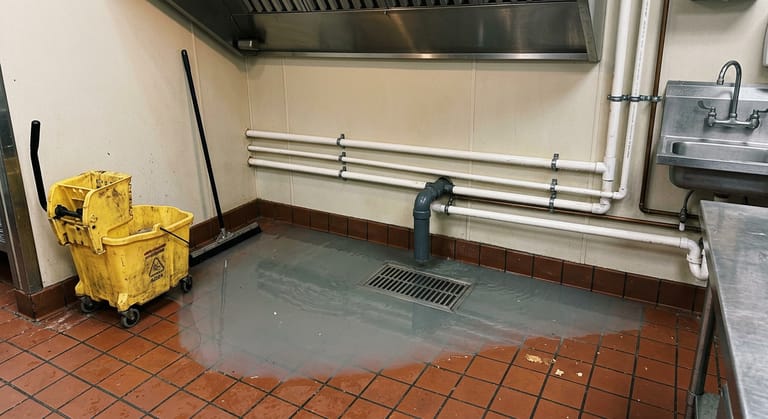
A slow floor sink is a schedule problem. Standing water on the kitchen floor during service is not, and neither is sewage backing up through the lowest drain in the building.
The difference matters because after-hours work costs more everywhere. If the line is still moving and dinner is going out, the honest answer is usually Monday, at a normal rate. Anyone who tells a restaurant every slow drain is an emergency is selling the emergency.
There is one exception worth naming. A grease trap that has not been touched in a year is not just full, it is a solid plug that has to be cut and dug out rather than sucked up. That job costs more than four pump-outs would have.
Grease trap or grease interceptor
Both words describe the same job: intercept fats, oils and grease before they reach the sewer. Plumbing codes mostly say interceptor. Kitchens, health inspectors and haulers mostly say grease trap. A city notice may use either.
What actually changes the work is the type. A hydromechanical unit under a three-compartment sink holds a few dozen pounds and gets serviced often, sometimes weekly. A gravity interceptor in a vault outside holds hundreds or thousands of gallons and needs a vacuum truck. The page on grease interceptors sorts out which one is sitting in your kitchen, and the comparison page covers the terminology a plan reviewer will use.
What the invoice should cover
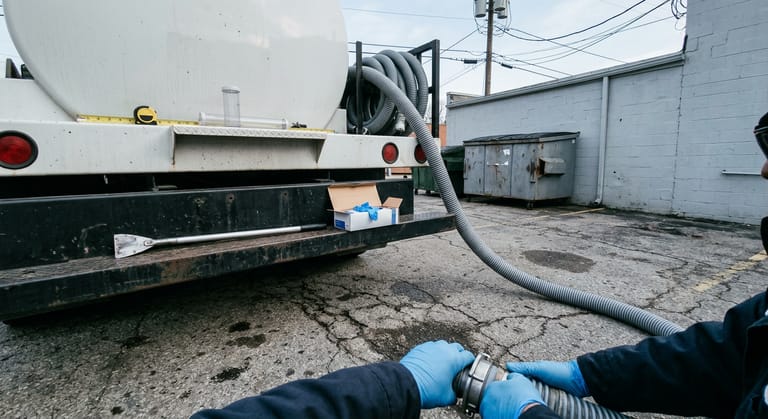
Skimming the top layer is not cleaning. A visit that earns the invoice removes everything, liquid and solids, then cleans the walls, checks that the baffles and the outlet tee are intact, and puts the water back so the unit works when service starts. The cleaning page walks that visit step by step.
The manifest matters as much as the pumping. It records the date, the volume removed, where the waste went, and who hauled it. That paper is what an inspector asks for: Dallas liquid waste inspectors ask to see the manifests from a permitted transporter, and Houston makes the kitchen keep its copies on site for five years.
Two shortcuts to refuse: pouring the liquid back into the trap after separating out the grease, and running hot water or degreaser through the unit to push the problem downstream. Degreasers and other chemical emulsifiers are prohibited in the model plumbing code at IPC Section 1003.3.3, and New York City and Portland, Oregon ban interceptor additives outright; check your own ordinance before anyone pours liquid back in. Either shortcut puts the grease into the sewer, which is the exact thing the interceptor exists to prevent.
Talk to someone who opens these lids every week
Call (800) 555-0184Free to dial. Whoever answers pumps and services grease interceptors; ask for the registration number your city requires while you are on the call.Partner haulers and plumbers who work on food service drains- Partners who pump interceptors, not just unclog sinks
- Answered during the dinner rush
- Dialing costs nothing and books nothing
Grease trap cleaning near me, and what near actually means
That search returns companies whose office is nearby, which is not the same as a truck that can be at your back door on a schedule you can keep. Two things decide whether a grease trap cleaning service is genuinely local to your kitchen: whether they already run a route in your part of the metro, and where they are permitted to offload what they pump.
Ask the second question directly. A company that hauls to a permitted receiving station forty minutes from your lot builds that drive into the price and into how tightly they can hold an appointment window. One already serving the block behind you can often add a stop.
Distance also decides what an emergency call really costs. A partner with a truck twenty minutes out can treat a Friday backup as a same-evening job. One two hours out cannot, at any price.
What commercial grease trap cleaning covers, and what it does not
Cleaning a commercial interceptor is a pretreatment obligation, not a housekeeping chore. The kitchen is a permitted discharger to a public sewer, the interceptor is the equipment that keeps that discharge legal, and the service record is the evidence.
That is why the invoice and the manifest are separate documents doing separate jobs. The invoice says a company was paid. The manifest says a measured volume left your address on a date and arrived somewhere licensed to take it. Inspectors read the second one.
What the visit does not cover is everything downstream of the interceptor. A lateral packed with years of hardened grease, a broken outlet tee, or a floor sink that was never vented correctly are separate repairs, usually by a plumber rather than a hauler. A good partner will tell you which of those they can do and which they cannot.
Where the money goes
Silverbeck is a publication. It does not pump, install or inspect anything. Scheduled work that starts with a call from these pages may earn a referral fee from the partner company. The partner pays that fee; Silverbeck bills the kitchen nothing and does not set the partner's rates. No manufacturer or service company pays to be described favorably on these pages. The details are on how we make money.
Pages here cite the code section, the ordinance or the manufacturer document behind every number, so a general manager can check the claim before repeating it to a landlord or an inspector.
Start where your problem is
If a date is on the calendar, start with how often a grease trap has to be cleaned and the record your city expects. If a drain is misbehaving, start with restaurant drain cleaning; if the health report names hand sinks, air gaps or a floor sink, start with restaurant plumbing. If you are opening or remodeling, start with installation and sizing, because the size the plan reviewer accepts is calculated by a published method, not guessed, then read how four cities regulate a restaurant grease interceptor before the plan goes in.
And if you simply need the tank emptied this week, the phone number at the top of this page reaches an independent partner company that pumps and services commercial interceptors. The quote is theirs, and the manifest they leave is yours to keep.
Talk to someone who opens these lids every week
Call (800) 555-0184Free to dial. Whoever answers pumps and services grease interceptors; ask for the registration number your city requires while you are on the call.Partner haulers and plumbers who work on food service drains- Partners who pump interceptors, not just unclog sinks
- Answered during the dinner rush
- Dialing costs nothing and books nothing